

Reverse Cycle Not Heating Properly? What To Check This Winter
If your reverse cycle air conditioner is running but the room isn't warming up, you're not imagining it and you're not alone. Mid-winter is when systems that haven't been serviced in a while start showing their hand — and in the Northern Rivers, where damp humid winters and coastal salt air create conditions that accelerate system wear, the complaints tend to cluster. This guide works through the most common reasons a reverse cycle air conditioner stops heating properly, which of those you can fix yourself right now and which ones need a licensed technician. If you're in Lismore, Ballina, Byron Bay or Lennox Head and your heating isn't performing, start here.
First: Make Sure It's Actually in Heat Mode
This sounds obvious but it's genuinely one of the most common causes of a reverse cycle air conditioner not heating — and it costs nothing to fix.
Modern reverse cycle remotes have multiple modes: cooling, heating, fan only, dry and auto. Auto mode sounds like it should work, but in a mild Northern Rivers winter, it sometimes decides the room temperature is close enough to the set point and runs in fan-only or low-output mode rather than actively heating.
Check your remote and confirm:
- The mode is set to heat (sun icon) — not auto, cool or fan
- The set temperature is at least a few degrees above the current room temperature
- The fan speed isn't set to low — higher fan speeds distribute heat more effectively
If the mode is correct and it's still blowing cool or lukewarm air, keep reading.
Check the Filter First
A blocked filter is one of the most common causes of a reverse cycle air conditioner not heating effectively. When the filter is clogged, airflow through the unit drops and heating output drops with it.
In the Northern Rivers, idle winter systems are also prime territory for mould. A system that sat unused through summer and has now been switched on for heating will often push through a musty smell and reduced output from a filter that's accumulated dust and mould growth during the idle period.
To check and clean the filter:
- Turn the unit off and wait for the fan to stop
- Open the front panel and remove the filter
- Hold it up to light — if you can't see through it, it needs cleaning
- Wash with warm water, dry completely and reinstall
If the musty smell persists after cleaning, there's likely mould growth on the evaporator coil — that needs a technician.
Check the Outdoor Unit
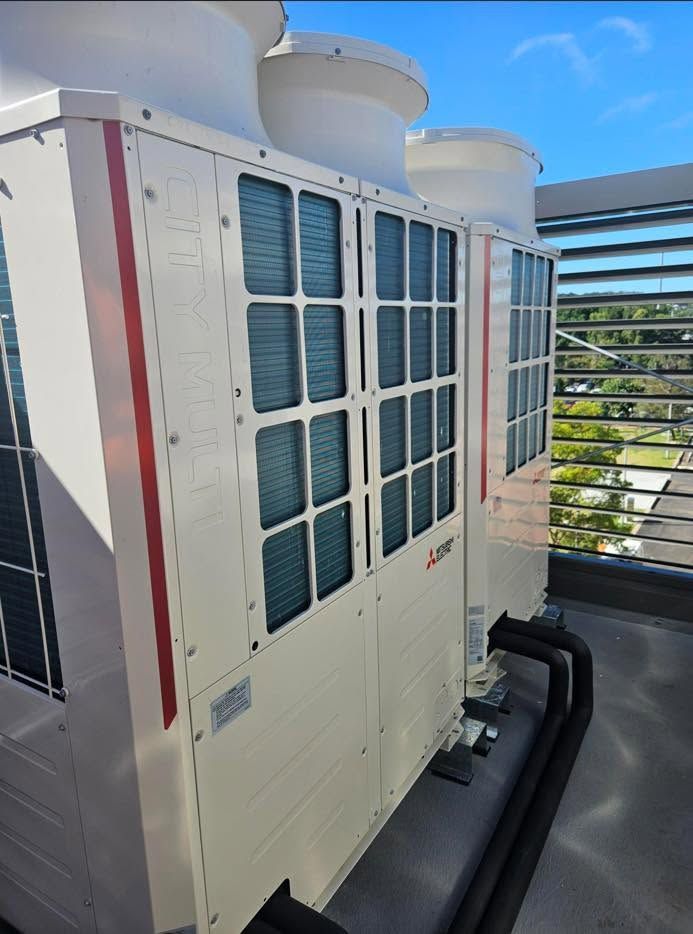
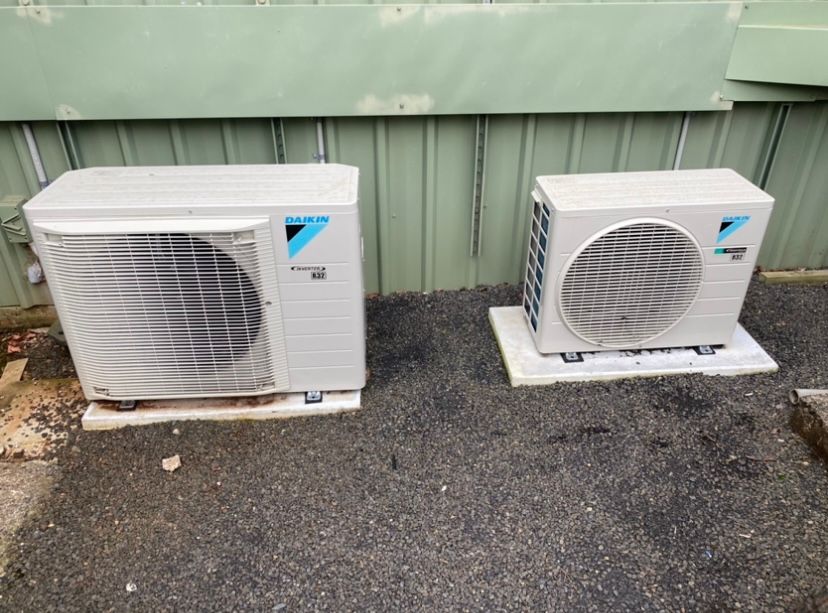
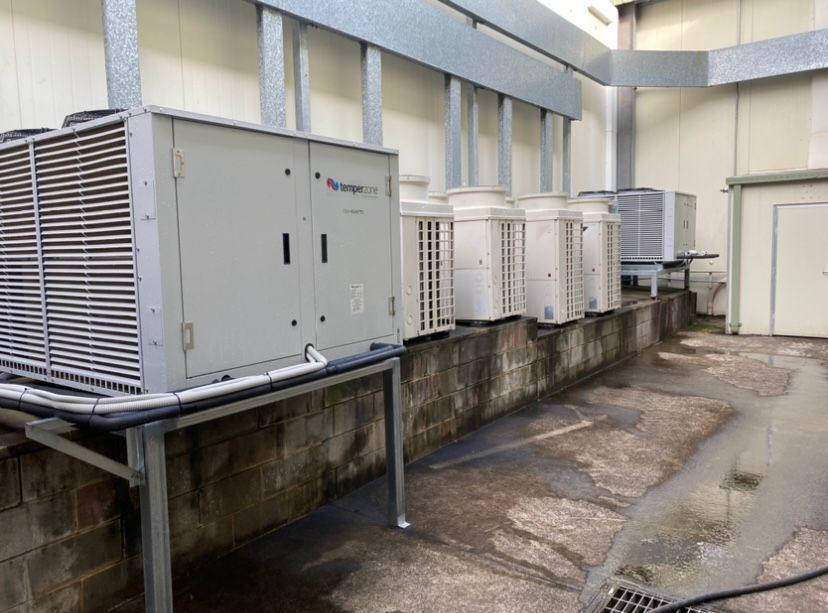
The outdoor unit is where the heat exchange happens in heating mode. Anything disrupting airflow around it affects performance directly.
Check for obstructions — vegetation, stored equipment or debris blocking airflow around the unit. Also check for ice: light frost on the outdoor unit during a cold morning is normal, but heavy ice build-up that doesn't clear indicates a refrigerant issue or defrost fault.
For units in coastal locations — Byron Bay, Ballina and Lennox Head in particular — salt air accelerates corrosion on outdoor coil fins. A visibly corroded coil has reduced heat transfer capacity that a simple clean won't restore.
Why the Northern Rivers Winter Creates Specific Problems
The Northern Rivers doesn't get dramatically cold winters, which is part of why underperforming reverse cycle air conditioning in the Northern Rivers often goes unaddressed longer than it should. What makes the region specific is the combination of high humidity and coastal exposure.
Humidity and mould:
Systems that sit idle before winter often accumulate mould on the indoor coil and drainage system. When heating mode is switched on, that growth gets pushed through the airstream — which is why the musty smell so many homeowners notice at the start of winter doesn't clear on its own.
Coastal corrosion:
Units at Byron Bay, Ballina and Lennox Head are exposed to salt-laden air that corrodes aluminium coil fins progressively. A system that's been serviced annually holds up considerably better than one that hasn't been touched in several years.
Running costs: If reverse cycle heating running costs have climbed compared to previous winters, reduced efficiency is usually the cause. A system working against a clogged filter or corroded coil runs longer to achieve the same output — electricity consumption rises while comfort drops.
Most mid-winter breakdowns trace back to a skipped service — regular
air conditioning maintenance Northern Rivers homeowners book with Frigid-Air prevents them.
What Needs a Technician
Some problems are DIY-accessible. Others require a licensed refrigeration technician — attempting them without the right equipment makes things worse and can void insurance.
Call a technician for:
- Low refrigerant: If the system runs but produces barely any heat regardless of settings, low refrigerant is a likely cause. It means there's a leak that needs to be found and repaired before a regas will hold.
- Reversing valve fault: The reversing valve allows the system to switch between heating and cooling. A stuck or faulty valve is a common cause of a system blowing cool air in heat mode — it's a component replacement job.
- Sensor and control board faults: Rapid cycling, error codes or erratic behaviour are typically sensor or board faults requiring proper diagnosis.
- Mould on the indoor coil: Coil cleaning requires specialised agents and partial disassembly — it can't be done through the filter opening.
- Corroded outdoor coil: Coil treatment and fin straightening at coastal locations requires a technician and appropriate materials.
Not sure how urgent it is? Our guide on signs your air conditioner needs a professional repair sets out when to stop troubleshooting and call someone.
How to Use Reverse Cycle Heating More Efficiently Right Now
Knowing how to use reverse cycle heating efficiently makes a real difference to both comfort and running costs:
- Set the temperature to 19–21°C — pushing it to 26°C or higher makes the system work harder without proportionally more warmth
- Pre-heat with the timer — bringing a cold room up to temperature takes longer than maintaining warmth; starting thirty minutes earlier is more efficient than cranking it up from cold
- Close doors and windows — reverse cycle heating works best in a defined space; open areas lose heat faster than the system replaces it
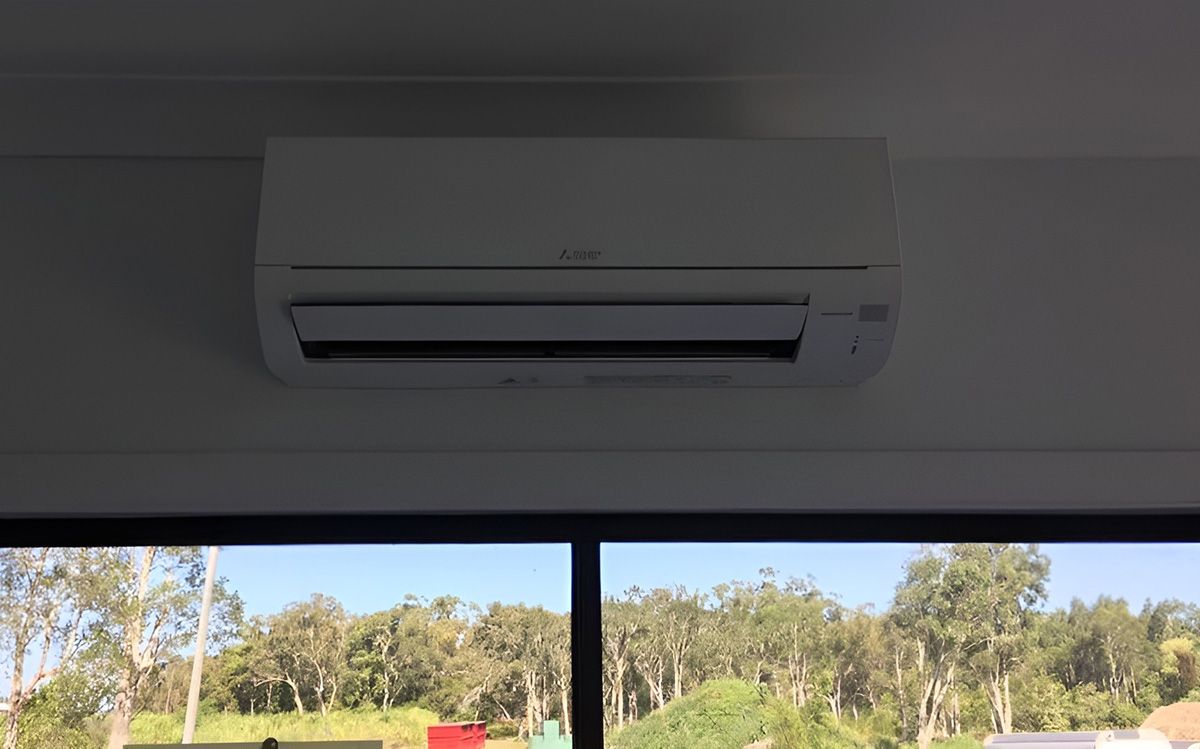
- Don't block the indoor unit — furniture or curtains directly in front of the indoor unit restrict both heat distribution and return airflow
Book a Service While Availability Is Good
Winter is the quieter season for air conditioning repairs in the Northern Rivers — the summer rush is past and the pre-summer booking spike hasn't started. Call-out times and service availability for air conditioner service in Ballina, Lismore and across the region are shorter now than they will be later in the year when every homeowner who neglected their system is trying to book at once.
If a clean filter and a mode reset haven't fixed it, it's time to call a technician. Frigid-Air has been servicing and repairing air conditioning in Ballina and across the Northern Rivers for over 30 years and can have a licensed technician out to you as soon as possible.